


What is a TLD?
TLD or Top-Level Domains are the names placed at the highest level of the Internet’s Domain Name System (DNS). You will know them as the LAST non empty label of a web address. e.g., .com .sg .gov .net .io
As you browse the internet and begin studying web development subjects later on, in your programme, or buy your own web server space and web domain, you may begin to understand their importance.
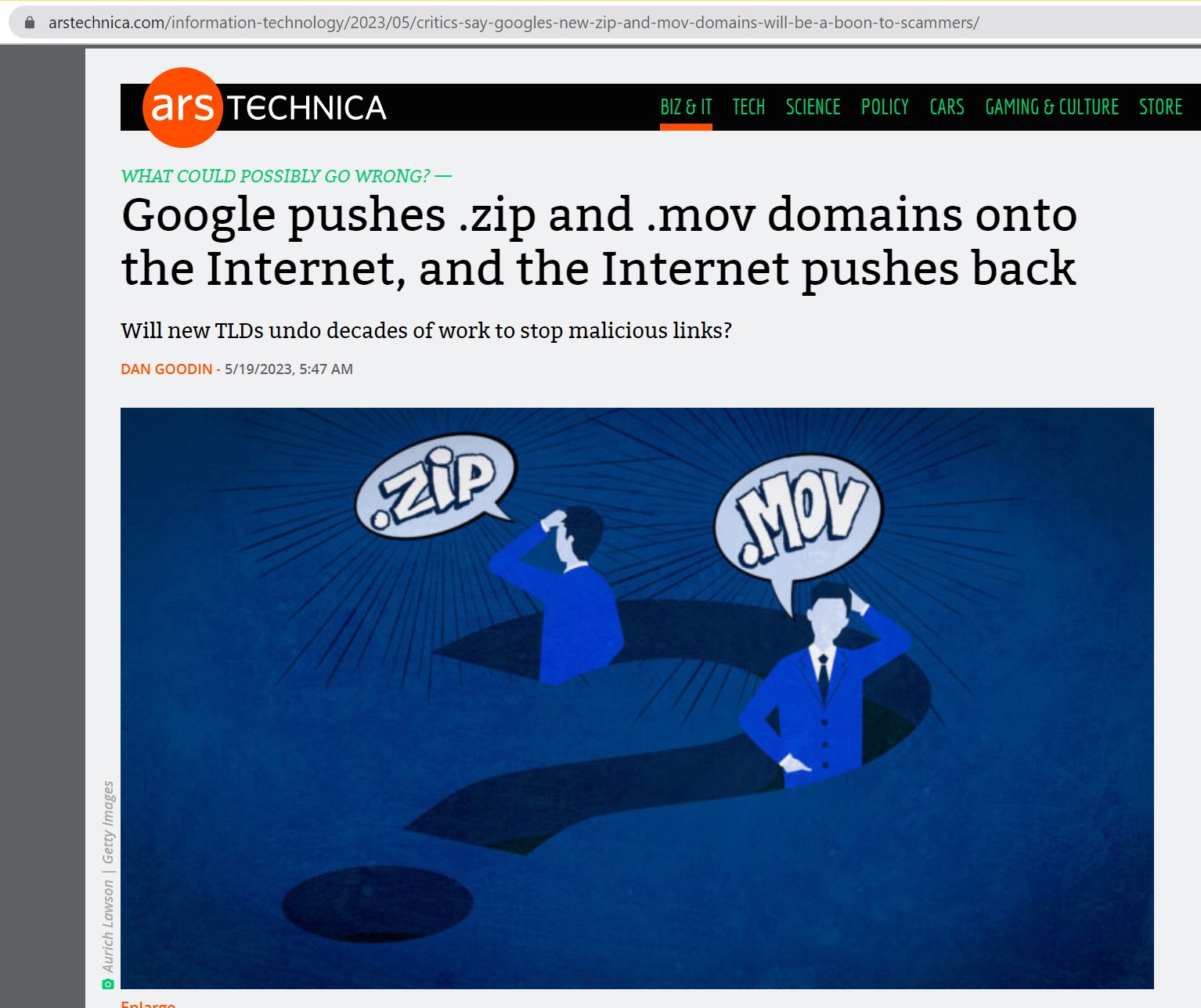
A recent move by Google to populate the Internet with eight new top-level domains is prompting concerns that two of the additions could be a boon to online scammers who trick people into clicking on malicious links. Two of Google’s new TLDs—.zip and .mov—have sparked scorn in some security circles.
Ref: https://arstechnica.com/information-technology/2023/05/critics-say-googles-new-zip-and-mov-domains-will-be-a-boon-to-scammers/
TLDs are important because they are also identifiers to help consumers recognise the relevance and authority behind the websites. To have TLDs that are too similar to certain familiar file extensions could mislead noob consumers, as such users may mistakenly recognise .zip as a compressed file or .mov as an Apple QuickTime video file format.
In software development space, such name features might be utilised by artificial intelligence (AI) components / cybersecurity blacklist to better protect users from spam.
This could open up opportunities and new social engineering strategies for scammers to target the normal citizens.
The eight new TLDs are:
- .dad
- .phd
- .prof
- .esq
- .foo
- .zip
- .mov
- .nexus
Similar news on above topic: